Little Dramas I
The interior offers a unique opportunity to inhabit an encapsulated world, containing within it distilled ideas, fever dreams, hidden desires, mechanisms of control, dissonances, harmonies…a whole world that has been touched (and in turn touches us) through design in almost every way.
LITTLE DRAMAS Part 1: The Street
IoA, University of Applied Arts Vienna
Gregorio S. Lubroth
The interior offers a unique opportunity to inhabit an encapsulated world, containing within it distilled ideas, fever dreams, hidden desires, mechanisms of control, dissonances, harmonies…a whole world that has been touched (and in turn touches us) through design in almost every way.
But what is design? Is it something that we make or does it make us? Perhaps both at once? Perhaps we are “suspended in a complex and continuous back and forth between [ourselves] and artifacts.” * Designers are often tasked with solving problems. We tend to believe in a clean causality: intentions are materialized into things by way of design. In this course, rather than design solutions, we are going to ask questions that point to a more unstable relationship between the things and environments we make and our sense of self within them. The questions will emerge from an interrogation of the interior. The course is taught over 2 semesters. Each semester is a separate teaching unit. Students from one course are not expected to take the other.
Part 1 The Street / Third Places:
The winter semester focuses on third places, here defined as small urban rooms connected to the street that, although transactional in nature, function as a middle realm between the home and the workplace. In their aggregate they add up to an alternative public sphere: the café, the record store, the arthouse cinema, the bar, etc.
Part 2 Domestic Theater:
The summer semester focuses on urban domestic space, primarily as apartments or housing units, featuring a range of habitation scenarios: the single occupant, the nuclear family, the Wohngemeinschaft.
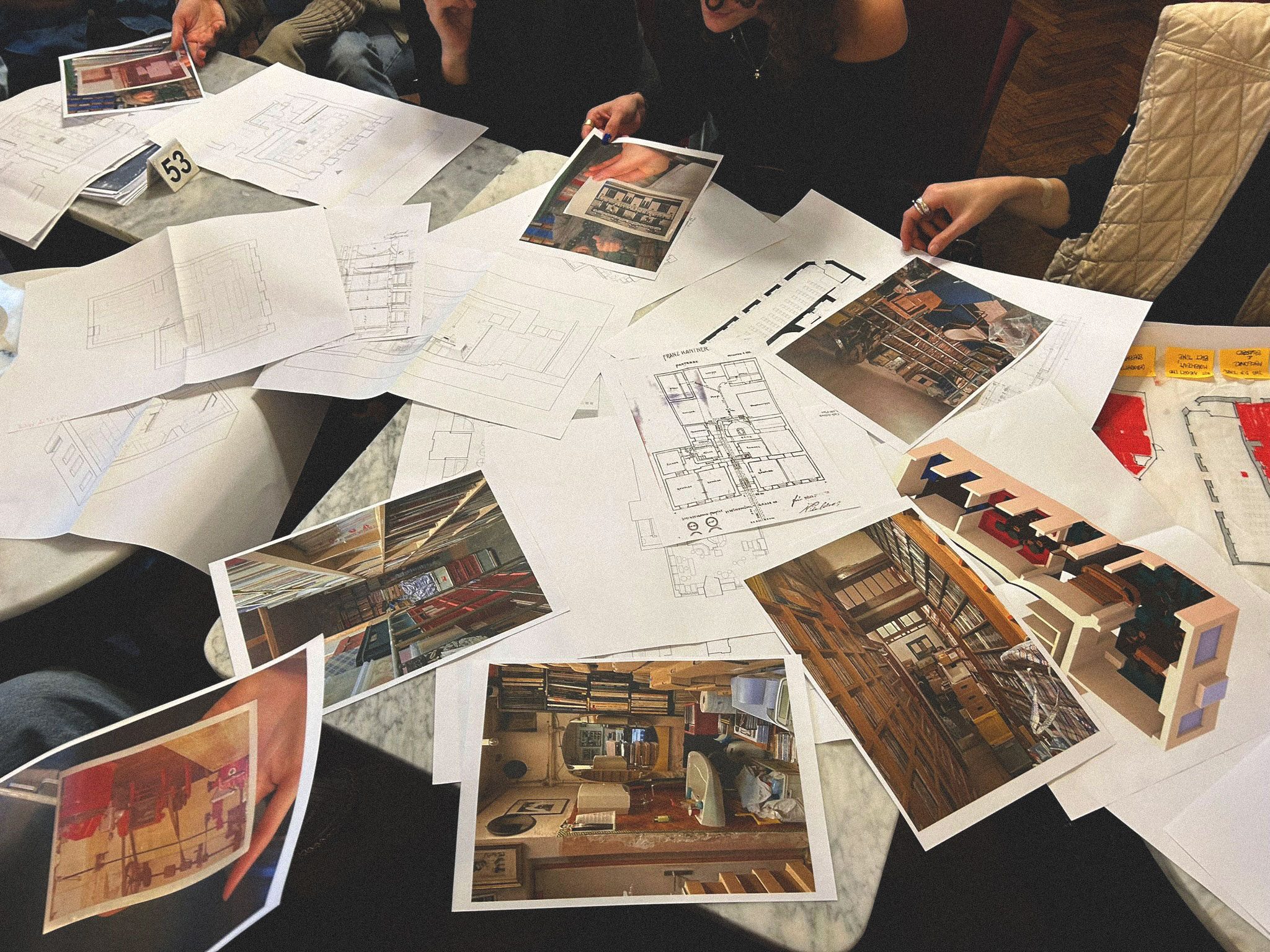
The work of this class is to produce a ‘little drama’, an architectural document that attempts to represent interior space taking into account not only physical reality but also a greater web of contingencies.
For a more detailed description, please refer to the course syllabus(downloads file).
* Beatriz Colomina, Mark Wigley, are we human? notes on an archeology of of design, (Zürich: Lars Müller Publishers, 2016)
students: Luca Dietrich, Leonard Felix, Nave Knafo, Vít Kučerovskýd, Gala Alica, Valeriia Pchelina, Melanie Quintero, Burhan Rodoplu, Franz Xaver Roos, Magdalena Weierman
guests: malika fanka, maik novotny, tulay atak, konstantin kim
A daylong Vienna tour introduces the students to their sites of investigation. For part 1 in the winter semester, the sites are small, semi-public rooms (50 – 250 m2). Although differing in use (café, store, cinema, bar), they are all intricately connected to the street and to the life of the neighborhoods that house them. For part 2 in the summer semester, the sites are a diverse set of private residences, usually located in apartment buildings. In both semesters the sequence of places that we visit can be read as stations in the cycle of a Viennese day from morning to evening.
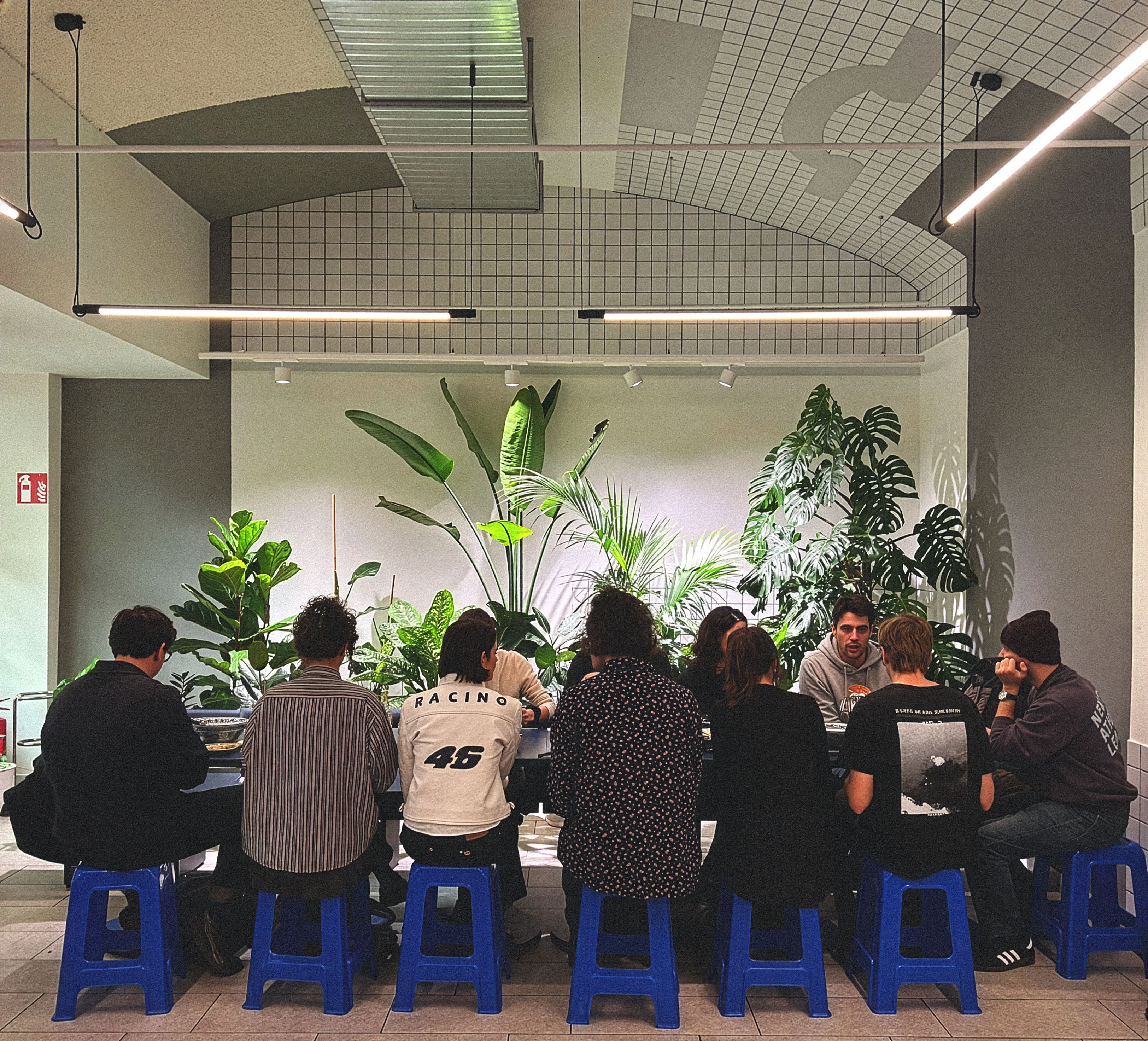
The format of our weekly meetings is based on the idea of a Stammtisch , a ‘regular’s table’, an informal gathering that facilitates open discussions. Each of the Stammtisch meetings takes place in an off-campus site around the city: a cafe, a reading room, a bar. Discussions of the assigned readings and the collective evaluation of developing work are the foundation for the weekly meetings. On occasion, external guests will join the Stammtisch discussions.